Protecting and enhancing potatoes’ reputation as a nutrient-dense vegetable is one of Potatoes USA’s core objectives, and it touches nearly everything we do, from nutrition research to media engagement. There’s good reason to believe it’s working: in the 2025 Attitudes & Usage Study, six in 10 consumers agreed that potatoes are nutrient-dense, up five percentage points since we first asked in 2021. That’s real progress, but there’s still room to grow.
One factor shaping consumer perception is what people read and hear in the media. Most coverage of potatoes is positive, but when inaccurate claims make it into the news, they can reinforce the kind of misperceptions that keep people from eating more spuds. That’s why one of Potatoes USA’s programs focuses on monitoring the media landscape and correcting misinformation when it appears.
What We’re Correcting
When inaccurate information appears in the media, it tends to fall into familiar territory:
- Claims that sweet potatoes or other vegetables are more nutritious than white potatoes.
- Misinterpretation of study results that misstate the negative health impacts of eating potatoes.
- Outdated takes on the glycemic index and potatoes’ impact on blood sugar.
These aren’t fringe claims — they show up in major publications, and they shape how consumers think about the food on their plate.
Our process is proactive and rigorous. We monitor the news continuously for inaccuracies, work with our Director of Nutrition, nutrition science experts, and the Alliance for Potato Research and Education to build a fact-based response and reach out to the publication with the correct information. Our goal is to get a correction — and since July 2025, we’ve achieved that 60% of the time. But it’s also an educational opportunity to help reporters learn more about potatoes in ways that improve future coverage.
For a look at that process in action, check out this example from Vogue, where we successfully corrected a piece comparing sweet and white potatoes, ensuring readers saw a more accurate picture of their nutritional value.
The Bigger Picture
Beyond individual corrections, we track the broader media landscape through quarterly analysis of traditional and social media coverage. One of the most telling metrics is the positive-to-negative coverage ratio — a simple snapshot of how many positive stories there are for every negative story.
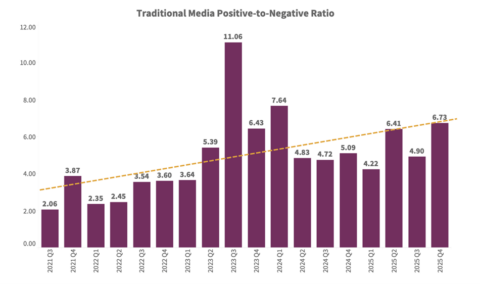
For the quarter October–December 2025, we saw 6.73 positive traditional media stories for every one negative story. That’s a strong number on its own, but the trend is what really stands out: since tracking began in 2021, the ratio has nearly doubled.
The biggest gains have come in health and nutrition coverage — the area that presented our greatest challenge from the start. Since 2022, the average volume of positive health stories has more than tripled, and the total share of health coverage that’s positive has grown from just over half to nearly two-thirds.
From Defense to Offense
Perhaps the most encouraging shift is that fewer stories now require correction, creating more opportunities to engage proactively with reporters. That means more chances to tell the potato nutrition story before articles are written rather than correcting the misinformation after the fact.
A recent article from EatingWell on sweet potatoes vs. white potatoes is a great example. Potatoes USA had the opportunity to provide input before publication, sharing information on the benefits of white potatoes and how they impact blood sugar. The resulting piece featured her quotes and was one of the most informative and balanced articles we’ve seen on this topic.
This kind of proactive engagement is where reputation management becomes something more — not just protecting the narrative but shaping it.
Looking Ahead
The work of protecting potatoes’ reputation is never finished. Misinformation will continue to surface, and we’ll continue to respond. But the data tell a clear story: the conversation is shifting, the coverage is improving, and we’re increasingly in a position to lead the narrative — helping more consumers feel confident putting potatoes on their plate.
