Disclaimer: You are navigating to a website maintained by a third party and are about to leave the Potatoes USA website. The external link should not be considered an endorsement by Potatoes USA of the third-party website or the company or organization that owns it, and Potatoes USA is not responsible for the accuracy or nature of the content of the linked website.
Culinary Medicine Immersion Gets Healthcare Pros Recommending Potatoes for Patients
February 26, 2025
Eating more potatoes means eating more vegetables—and there are endless possibilities for patients seeking nutritious, culturally relevant ways to add spuds to their diets.
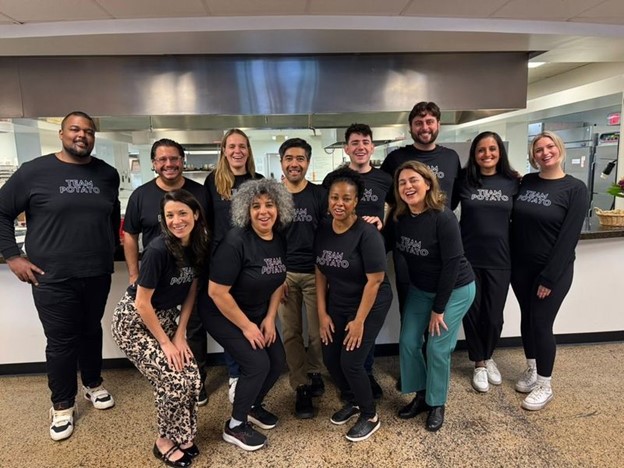
That was one takeaway for healthcare professionals attending Potatoes USA’s culinary medicine immersion at Tulane University’s Goldring Center for Culinary Medicine in New Orleans in January. The event invited 10 highly-accomplished healthcare professionals to participate in hands-on learning about how potatoes can be a nutritious diet staple for patients from different cultures or low-income backgrounds.
“We had holistic conversations about how to elevate the entire produce category with potatoes being part of a traditionally sound meal plan,” said Chef RJ Harvey, Director of Culinary at Potatoes USA. “We’re doing that so we can educate doctors and healthcare professionals—who have their patients’ trust—on how to prepare nutritious foods.”
What is culinary medicine?
Culinary medicine is an evidence-based field in medicine that blends the art of food and cooking with the science of medicine. Its objective is to help people reach good personalized medical decisions about accessing and eating high-quality meals that help prevent and treat disease and restore well-being.
Going beyond fresh
Considering the diverse needs and incomes of patients, the culinary medicine immersion went beyond recommending only fresh potatoes for patients.
“One ‘aha’ moment came from healthcare professionals who didn’t consider products like frozen or dehydrated potatoes as a nutritious option,” Harvey said. “They were really intrigued by ways that patients on a budget could use these options to create a nutritious meal in an hour or less.”
As one example, Executive Sous Chef Aurora Hollenbeck showed participants how to reconstitute dehydrated potatoes with flour and Greek yogurt to create potato bagels with six simple ingredients and 10 grams of protein.
Recommending culturally relevant meals
The event went beyond nutrition to share tips for recommending potatoes in global cuisines. This included a “world tour” of potato dishes from regions spanning Asia, Africa, the Caribbean, Europe, Latin America and North America.
“It’s important to hit on those notes because they don’t want to recommend the wrong type of cultural cuisines, and they’re dealing with diverse patient populations,” Harvey said. “For example, you wouldn’t tell a patient from Peru not to eat potatoes.”
On the second day of the event, participants got to try some of their own hands-on creations.
“They knocked it out of the park,” Harvey said. “One team wanted to theme their dish after New Orleans, so they did a play on shrimp and grits. They made potato grits using fine diced potatoes and nutritional yeast instead of parmesan cheese, and then they breaded oyster mushrooms with potato chips and dehydrated potato flakes.”
What they’re saying
“While we were there, one participant had a call with a patient whose labs showed low potassium. The physician said he told his patient to enjoy potatoes to get more potassium, and he was really geeked about that,” Harvey said.
“They definitely shared they were excited about all the different ways to utilize frozen and dehydrated potato products to save a lot of time while still getting the nutritional benefits,” Hollenbeck said.
Weekly Potato Industry Insights
Get stories like this, and the latest news from Potatoes USA, sent directly to your inbox!